
A new book on consciousness will blow your…oh never mind
Think about your thoughts, just for a sec. Do they come to you as words? If yes, through a voice? Whose? Maybe visually, like floating text? As to images: Color or black and white? Maybe transparent, fleeting. Music? If yes, full bars or just notes? Recognizable songs, or your own? All of this, none of this, sometimes, always?
It’s hard to describe the nature of our thoughts, even considering how common, continuous and widespread they are.
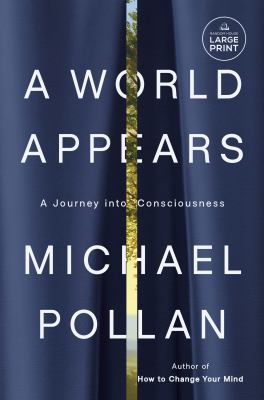
Michael Pollan has written a masterful but very understandable and super-fun book on the subject of consciousness, titled The World Appears. He is a Harvard professor, science and nutrition writer and author of The Omnivore’s Dilemma, How To Change Your Mindand many other books. You may have heard him on a podcast or two where he is smart, articulate and appealing. Yeah, I’m a fan.
Here’s a superficial skimming of the book in the hopes it’ll hook you.
Let’s start with his description of thoughts, to contrast with my own clumsy one up top; first, its contents: “…sense impressions, feelings, words, images, daydreams, mind-wanderings, ruminations, deliberations, observations, opinions, intuitions, and occasional insights…” And, second, how it feels. He says he always assumed, since he’s a writer, that his stream of consciousness was like a monologue or dialogue, but certainly word-centered. “But it turns out that a lot of my so-called thoughts – a flattering term for these gossamer traces of mentation – are preverbal, often showing up as images, sensations, or concepts, with words trailing behind as a kind of afterthought – belated attempts to translate these elusive wisps of meaning into something more substantial and shareable.”
It’s a slippery subject. For example, there are some 21 different theories of what consciousness actually is. For another, let’s cite the so-called hard problem, which no one has been able to convincingly answer: how does subjective experience emerge from matter? Wispy thoughts from fleshy brain? Scientists are agnostic on the substrate – the material foundation of consciousness. Some aren’t even sure it’s somewhere in the brain. No biological structures have been identified.
To probe the mystery, Pollan considers a host of factors. One is evolution.
Why did we evolve consciousness? For the obvious reason: it is an evolutionary advantage. The purpose of consciousness is to maintain homeostasis: the system is seeking to reduce uncertainty by inferring causes and forming predictions. It involves the ability to direct attention, and to plan. So what prompted it? Oddly enough, the answer might be, according to Pollan and his sources, pain, fever and itch. What he calls the inaugural events of consciousness. Uncertainty such as hunger, physical jeopardy – these generate feelings and feelings generate consciousness. “Consciousness is felt uncertainty,” says one of his sources.
Another way of thinking about the primitive roots of consciousness is to study the most “primitive” life forms. Pollan spends an entire chapter on plant intelligence. Yessir. It’s possible plants have as many as 20 senses. Roots can sense gravity, moisture, light; volume, nitrogen, phosphorus, toxins and chemical signals from neighbors. They “decide” based on what they perceive…intention and agency.
Some plants will react if you play the sound of a munching caterpillar; it will produce a caterpillar-repelling chemical. Pollan describes an experiment in which a bean plant extended a stem in a sort of sweep, “seeking” to reach to a vertical pole scientists placed some six-ten feet away. The plant somehow “sensed” the existence of the pole, and reached out over time – taxing its resources of course — until it found the pole and began to wind around it and grow upwards. Other experiments involve plants navigating mazes to find nutrients.
Another extended passage from the book: “And this, I think, is the value of looking for mind in the simplest life-forms rather than starting the inquiry with its most elaborate forms in humans. If sentience begins with life, we can start to build a story of how human consciousness might have evolved from simple sentience: As organism and environment drove each other to become ever more complex, time horizons grew longer, the ability to plan emerged, then control of attention, followed by the sense of a separate self. And then, as selves like ours came to dominate the environment, the ability to imagine other minds and predict their next moves conferred a tremendous advantage. Enter human consciousness.”
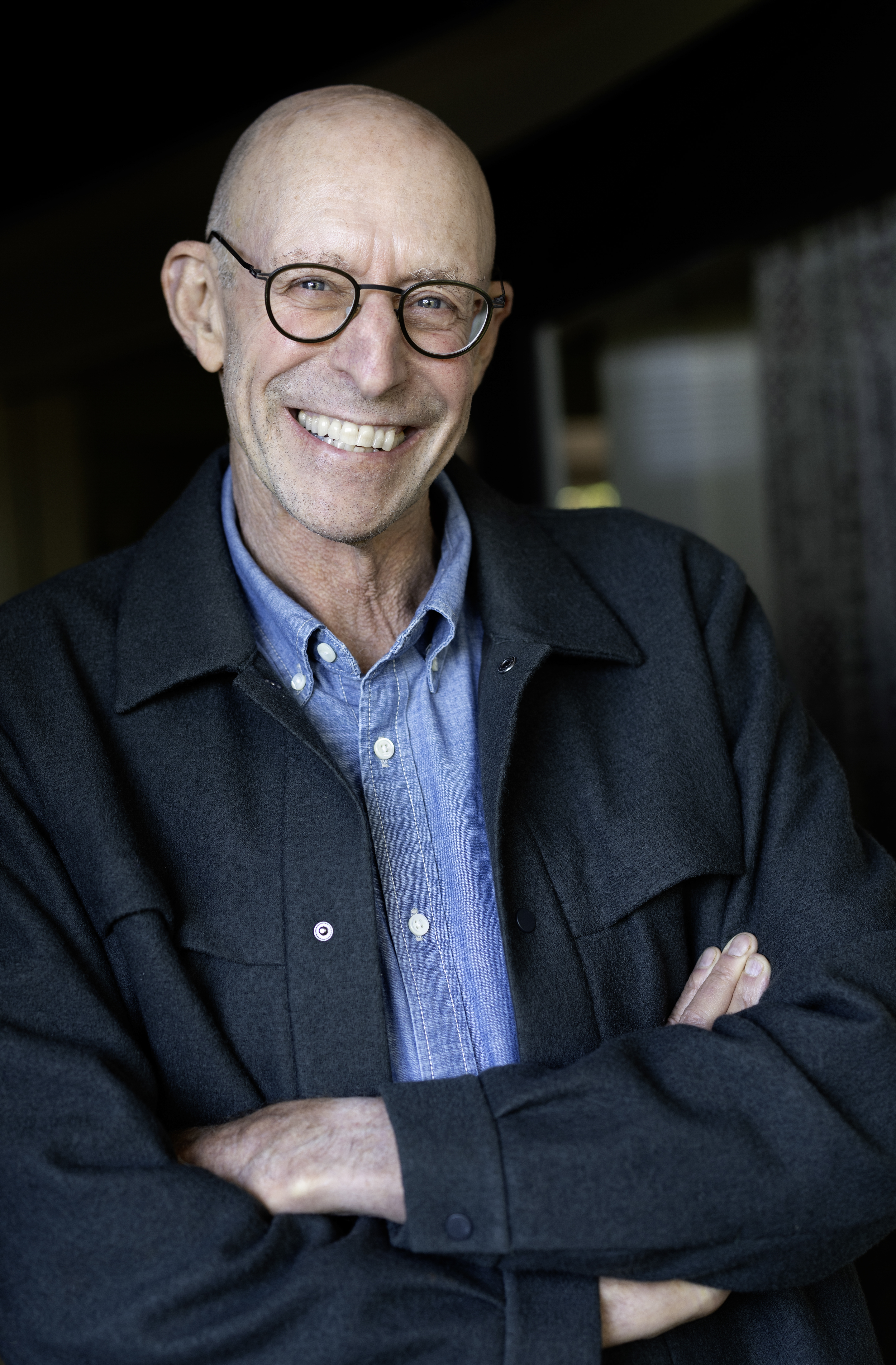
Pollan (right) outlines four stages or levels of awareness, of consciousness: sentience, feelings, thoughts and self. I’ll just elaborate on two:
Sentience. Pollan writes: “Purposeful, intelligent behavior can emerge more or less spontaneously from the interaction of ordinary cells joined in an electrical network. No neurons needed. No DNA either…sentience, or something like it, emerged in evolution long before animals or even plants.”
Feelings. “Feelings are the body’s way of getting the mind’s attention in order to keep us alive,” says neuroscientist Antonio Damasio, one of Pollan’s sources. (Feelings’ critical role has obvious implications for the evolution of AI.) He cites these as the basic feelings that might have helped generate consciousness in simpler animals: hunger, thirst, fear, hot and cold. When all our basic homeostatic needs (biological and emotional) are in balance, we can and do explore “subtler feelings of existence”
An interesting aspect of the role of feelings, and the hard problem of consciousness from brain, involves interoceptor neurons. They specifically monitor body signals like heart rate. Pollan writes that interoceptor neurons are unique in that they lack myelin, which is an insulating outer layer that protects all other neurons from errant signals. They also do not have the blood-brain barrier that protects the rest of the nervous system from toxins. This absence and lack of barrier allows these neurons to mingle with flesh that is not neural. They are in a position to convey information that other neurons cannot, and represent a sort of blending of body and brain. Damasio calls the homeostatic feelings generated by this neural-non-neural mingling as “the inaugural act” of consciousness. So “feelings” in a sense “originating deep in the subcortical of the brain grab the attention of the cortex, where they are evaluated into translated into conscious plans of action.”
I’ve concentrated on Pollan’s attempts to map the evolution of imagination from simple sentience by tracing cells, plants and animals. But the book contains so much more.
Pollan believes that reducing consciousness to information is one of many faulty simplications applied to the mystery of consciousness. A feeling can be explained, to some degree, but that will never represent all that it is. The same with our brains. To reduce it to information, to explain, is to miss the magic.
I highly recommend A World Appears.
HOLY ADDENDUM!: Let’s follow this scientific examination of consciousness with a more theological take. In an April issue of the New York Times, writer Peter Wehner interviewed David Bentley Hart, a theologian, philosopher and author. I didn’t understand 98% of it, so I’m just going to directly quote various passages that pertain to God and consciousness, toss it in your direction and get out of town. God bless!
David Bentley Hart: “The reason I’m not an atheist is that I think the philosophical arguments against it are unanswerable, or at least the philosophical arguments for something beyond materialism are unanswerable….
“Our sciences are not strictly mechanistic. Physics has not been mechanistic in a comprehensive way for more than a century now. Biology, the life sciences, are undergoing some rather extreme paradigm shifts regarding the levels of intentionality within cells…
“The whole reason the mechanical picture of nature was created was to perfect a method of inductive reasoning. That’s a very good impulse. It’s why we have medical treatments today that were undreamed of before this revolution in thinking….
“But this was a filtering process. It was creating a bracketing by excluding from our picture of nature all the marks of mentality — not just consciousness, but intentionality with a purpose, purposive thinking, the unity of consciousness. The realities you’re dealing with here are composite. You don’t have to account for that inexplicable oneness that underlies conscious apprehension…
“The problem is that we’re still using a model that was perfected through the exclusion of all the properties of the mental. It is impossible, using that model, to make sense of the phenomena of consciousness. So what you have to do instead is say that the phenomena of consciousness aren’t real. They can be reduced to mechanical processes. The more you try to do this, the more absurd it becomes. You do end up with, say, Dennett, who said that consciousness is an illusion….
“This is the bind we find ourselves in. And many of the phenomena of life, I would argue, also don’t fit the mechanical model….
“Your conscience united to what are pretty clear and concrete moral demands are already a metaphysics; they are already a doctrine. That is, they are declarations of the eternal character of God.”


